The caring support you need if you're a parent who's facing ... going through ... or moving on after divorce! - Divorce and Co-Parenting - Parenting Children of Divorce - Dating as a Divorced Parent
Created by Rosalind Sedacca, CDC
Latino Children
Asian Children
African Children
Caucasian Children
Moving through or beyond Divorce?
Get your free copy of Post-Divorce Parenting: Success Strategies For Getting It Right! by Rosalind Sedacca, CDC —
packed with valuable advice, tips, resources and more!
By Rosalind Sedacca, CCT As a divorced parent, what lessons and behaviors are you modeling for your children? The messages you convey will influence your children into adulthood. Here’s valuable advice on leaving a positive imprint on your innocent children. Bad things can happen to good people. Divorce is a prime example. Good people get divorced. Responsible people who are loving parents get caught in the decision to end a loveless or deceitful marriage. The consequences of that decision can either be life affirming or destroying, depending upon how each parent approaches this transition. Parents who are blinded by blame and anger are not likely to learn much through the experience. They see their former spouse as the total problem in their life and are convinced that getting rid of that problem through divorce will bring ultimate resolution. These parents are often self-righteous about the subject and give little thought
By Rosalind Sedacca, CCT LEARN TO LET GO If you truly want to move on from your divorce you must learn to let go of negative emotions that hold you hostage. These include anger, resentment, blame, jealousy, hatred and anxiety. Of course, there is a time and place for experiencing those emotions. Feel them; mourn the dream that turned sour. Then make a decision to let them go. Do this for your benefit – not on behalf of your former spouse. Negative emotions can hold you in limbo and suck the life out of you. You get stuck in a place that’s painful to experience and it makes you unpleasant to be around. For the sake of your children – if not for yourself – decide to let it all go. Determine to move on. It’s not always easy to do, but the contrast of living in your pain is
By Rosalind Sedacca, CCT Some parents think once they are divorced and most of the decisions have been made, the worst is behind them. Unfortunately, parenting after divorce is a week by week experience. Your success depends on the decisions you make, your attitude toward your situation and your compassion for your innocent children. You may have heard it all before, but smart parents quiz themselves regularly to see if they are not falling into some of the traps of destructive post-divorce parenting. If you find yourself making any of these mistakes, it’s never too late to make amends. You may have to alter decisions, adjust some behaviors, give yourself an attitude adjustment and even apologize to your children – or to their Dad! Keep in mind, we all make mistakes that we regret. It’s part of the learning process – especially when we’re parents. It’s far better to set
By Rosalind Sedacca, CCT For years I’ve been pointing out to parents that fighting around the children does more damage to them than their divorce. When parents handle divorce amicably and put their children’s psychological needs foremost when making all decisions, serious emotional harm to the kids is avoided. Now a study published in the Journal of Research on Adolescence confirms this perspective. While the focus on this study is on fighting over financial issues, the consequences are basically the same: damage to the children’s well-being. The study shows that children exposed to constant parental bickering are more likely to be depressed. They are also more prone to expressing other “problem behaviors,” including substance abuse, aggression and poor school grades. Not surprisingly the study revealed that among parents who were dealing with "money-related chronic stress," relationships with their children were highly tense and lacking in intimacy. Is the tension related to
Parenting Coordinator and trainer Ann Marie Termini, co-founder of the Cooperative Parenting Institute, has put together a set of rules that every divorced parent should take to heart. That’s because it comes from the heart of children like yours. While kids can’t adequately express themselves, these are the messages they want to share with you. Read them over on a daily basis until they are deeply entrenched in your mind and psyche. Before making important decisions that affect the well-being of your children during and after divorce, even many years after, refer to this list. Make sure you are not compromising their boundaries or putting them in awkward situations to appease your own needs, agenda and judgments about your former spouse – who is their other parent. With this list of rules in mind you will parent more effectively, earn your children’s life-long respect and give your kids the best
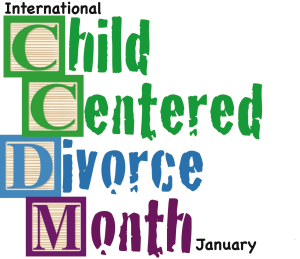
The ninth International Child-Centered Divorce Month is being commemorated once again in January. The entire month is devoted to alerting parents about the effects of divorce on children – especially the impact of parental decisions on their children’s well-being during and long after a divorce. Divorce attorneys, mediators, therapists, financial planners, coaches, parenting experts and other professionals around the world are providing free gifts to parents that offer advice and insights to help them best cope with divorce and parenting issues. Our Family Wizard, an online resource providing shared custody calendars and visitation schedules for co-parents, has stepped up to sponsor ICCD Month activities. More divorces are filed in January, following the holiday season, than in any other month. That’s why Rosalind Sedacca, Divorce & Parenting Coach and founder of the Child-Centered Divorce Network, chose January to commemorate ICCD Month each year. The goal is to educate parents about how
By Rosalind Sedacca, CCT It’s no secret that one of the biggest challenges a parent faces after divorce is maintaining good communication with your children. Obviously all parents struggle with communication issues as their children grow, but children who have had their lives dramatically altered by separation or divorce need even more attention – and diligent observation by their parents. Children tend not to tell you when they are angry, resentful, confused, hurt or depressed. Instead they reflect their problems through their behavior – acting out or perhaps turning inward in ways that you have not experienced prior to the divorce. Here are some tips that most all professionals agree about as ways to encourage positive and productive communication between you and your children. Many of these are obvious or innate behaviors. Some can easily be forgotten amid the challenges you are juggling in your own life on a daily
This website uses cookies to improve your experience. We'll assume you're ok with this, but you can opt-out if you wish. AcceptRejectRead More
Privacy & Cookies Policy
Privacy Overview
This website uses cookies to improve your experience while you navigate through the website. Out of these, the cookies that are categorized as necessary are stored on your browser as they are essential for the working of basic functionalities of the website. We also use third-party cookies that help us analyze and understand how you use this website. These cookies will be stored in your browser only with your consent. You also have the option to opt-out of these cookies. But opting out of some of these cookies may affect your browsing experience.
Necessary cookies are absolutely essential for the website to function properly. This category only includes cookies that ensures basic functionalities and security features of the website. These cookies do not store any personal information.
Any cookies that may not be particularly necessary for the website to function and is used specifically to collect user personal data via analytics, ads, other embedded contents are termed as non-necessary cookies. It is mandatory to procure user consent prior to running these cookies on your website.